Access Denied
IMPORTANT! If you’re a store owner, please make sure you have Customer accounts enabled in your Store Admin, as you have customer based locks set up with EasyLockdown app. Enable Customer Accounts
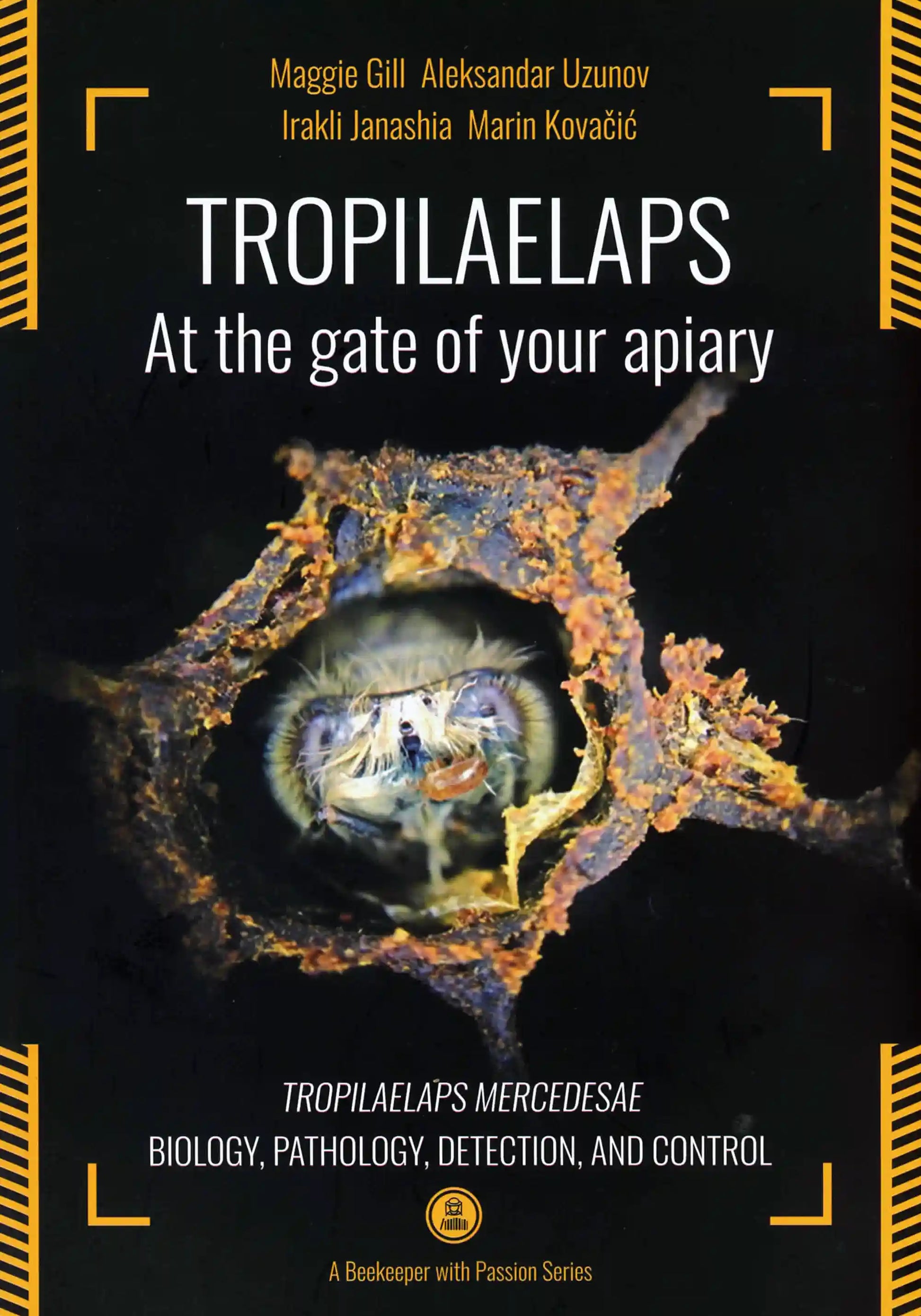
Tropilaelaps: At the gate of your apiary by Maggie Gill, Aleksander Uzunov, Irakli Janashia & Marin Kovačić
131,00 lei
Tropilaelaps: At the gate of your apiary
131,00 lei
“The parasitic mite, Tropilaelaps spp., is expanding its range globally and may be coming to an apiary near you! This book by Gill, Uzunov, Janashia, and Kovačić is an excellent way to become familiar with this honeybee pest and to better prepare should it arrive in your area.”
– Jeff Pettis (Apimondia President)
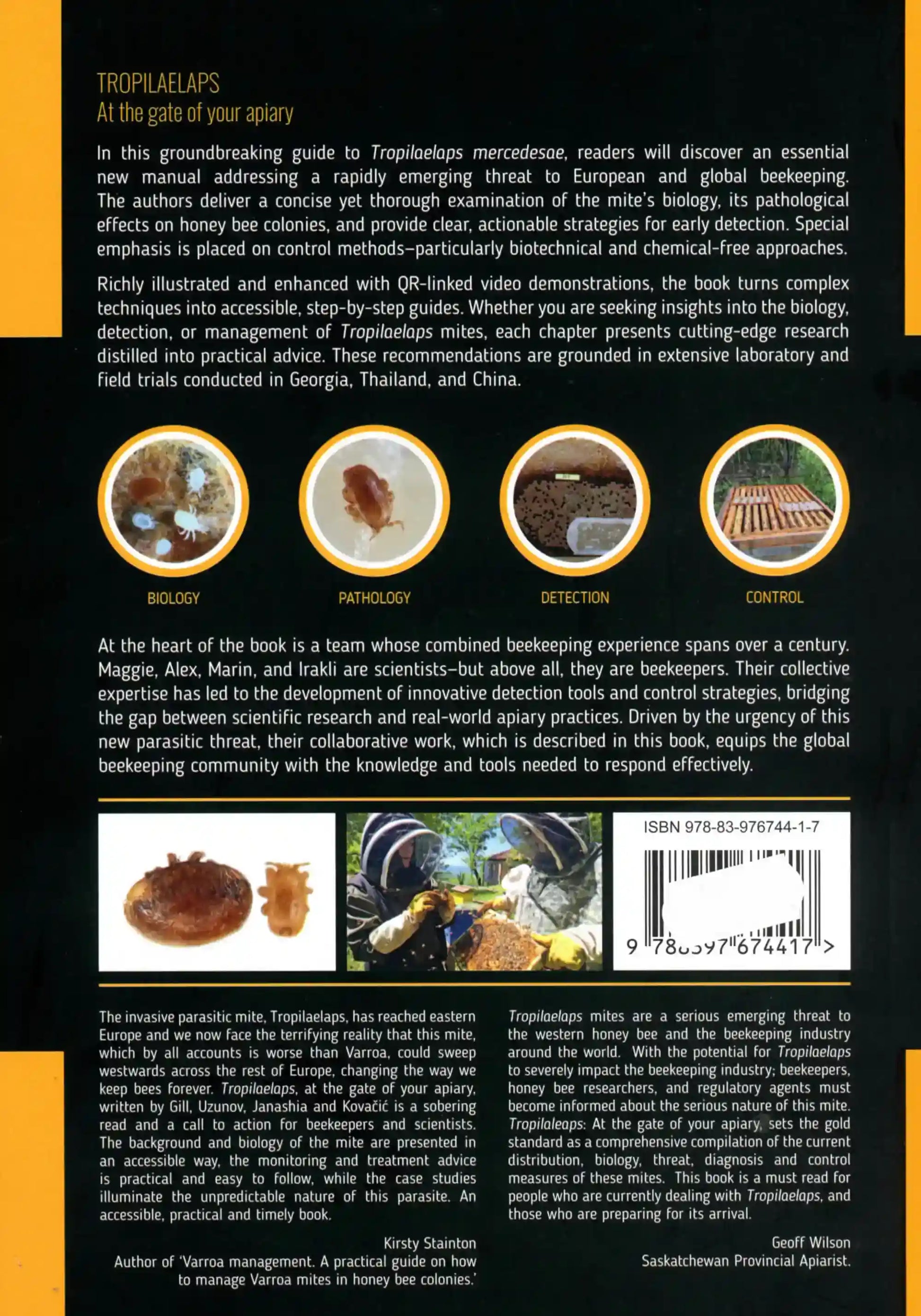
THE FIRST-EVER BOOK ON TROPILAELAPS MITE: In this groundbreaking guide to Tropilaelaps mercedesae, readers will discover an essential new manual addressing a rapidly emerging threat to European and global beekeeping. The authors deliver a concise yet thorough examination of the mite's biology, its pathological effects on honey bee colonies, and provide clear, actionable strategies for early detection. Special emphasis is placed on control methods-particularly biotechnical and chemical-free approaches.
Richly illustrated and enhanced with QR-linked video demonstrations, the book turns complex techniques into accessible, step-by-step guides. Whether you are seeking insights into the biology, detection, or management of Tropilaelaps mites, each chapter presents cutting-edge research distilled into practical advice. These recommendations are grounded in extensive laboratory and field trials conducted in Georgia, Thailand, and China.
At the heart of the book is a team whose combined beekeeping experience spans over a century. Maggie, Alex, Marin, and lrakli are scientists-but above all, they are beekeepers. Their collective expertise has led to the development of innovative detection tools and control strategies, bridging the gap between scientific research and real-world apiary practices. Driven by the urgency of this new parasitic threat, their collaborative work, which is described in this book, equips the global beekeeping community with the knowledge and tools needed to respond effectively.
VIEW Contents
- Introduction
- Taxonomy and Distribution
- Biology
- Morphology and Anatomy
- Life cycle
- Comparison with Varroa
- Pathology
- Individual level
- Colony level
- Detection and Diagnosis
- Methods on brood
- Methods on adult bees
- Molecular analysis
- Control
- Biotechnical
- Breeding
- Chemical
- Literature
- Authors
VIEW Book Review
Reviewed by Ann Chilcott (Scottish Expert Beemaster) and author of THE BEELISTENER
Tropilaelaps At the Gate of your Apiary by Maggie Gill, Aleksander Uzonov, Irakli Janashia and Marin Kovačić is the definitive book on Tropilaelaps mercedesae (tropilaelaps), and currently the only one of its kind available. It is well written and presents essential science-based information in lucid language for beekeepers that will be easily understood which is important because tropilaelaps is an imminent threat to worldwide beekeeping. Every beekeeper wanting to protect their bees and the future will need to read this book and learn how to cope when tropilaelaps breaches our own apiary gates. The authors are scientists three of whom are experienced beekeepers.
There are seven short, concise and detailed sections which include the introduction, taxonomy and distribution, biology, pathology, detection and diagnosis, control, and the literature sources and references. Diagrams, tables and high-quality photography enhance the text, and there are several direct links to videos that can be accessed via a mobile phone with camera.
The superb photography is particularly useful in helping to identify tropilaelaps and compare it with other similar looking pests. The biology of tropilaelaps is fascinating and something that must be understood in order to deal most effectively with this new pest. It has fewer features in common with Varroa destructor (varroa) than one might imagine, therefore effective treatments will not be exactly the same. We discover why tropilaelaps may be more damaging to beekeeping than varroa already is, and that we need to anticipate giving many more treatments because tropilaelaps increase rapidly after treatments reaching high levels again relatively quickly. Because tropilaelaps are smaller and faster moving, detection is not as easy as spotting varroa in a colony. The authors have tested various methods of diagnosing tropilaelaps and the most effective one currently involves the rapid uncapping of brood cells using depilatory wax strips. They present the pros and cons of all the detection methods and treatments. A case study from Thailand demonstrates the problems associated with using homemade medications, and the reader cannot help but feel grateful for the ongoing scientific work that will inform our management when we are eventually faced with tropilaelaps.The history of the spread of tropilaelaps is sobering, and the link to geography, climate, commerce and beekeeping practices helps the reader realise that the threat is real, and, relatively speaking, nearby.
This publication brings together all the recent remarkable collaborative scientific work and findings from across the world in one place providing us with the latest knowledge and intelligence hot off the press. It is positive and hopeful in offering solutions and new ways of working with both varroa and tropilaelaps. Tropilaelaps At the Gate of your Apiary is an excellent book and essential reading for all beekeepers and those involved in honey bee health.
Unavailable
Invalid password
Enter